A Background on Classical Osteopathy & Stillian Principles
Osteopathy was founded in the late 1800s by Dr. Andrew Taylor Still, who believed the body functions as an integrated whole, rather than a collection of isolated parts. His observations preceded our present understanding of the human body, yet his principles align remarkably well with what we now understand about physiology, adaptation, and movement.
Classical osteopathy views the body as inherently capable of self-healing and self-regulating. The osteopathic approach focuses on understanding how altered anatomical structure impairs physiological functioning, and by influencing the physical body we can restore health to the tissues.
This foundation continues to guide osteopathic manual practitioners (OMPs) today — especially those trained in classical, hands-on schools where anatomy, palpation, and functional mechanics form the core of education.
The Four Stillian Principles
The Body Is a Functional Unit
Structure and Function Are Interdependent
The Body Has an Innate Capacity for Self-Regulation
Rational Treatment Is Based on These Principles
Manual Medicine
Classical assessment includes:
Myofascial release
Joint mobilization and gentle manipulation
Craniosacral techniques
Visceral manipulation
Fluid and pressure balancing
Rhythmic oscillatory techniques
Muscle energy: post-isometric relaxation and reciprocal inhibition
What to Expect
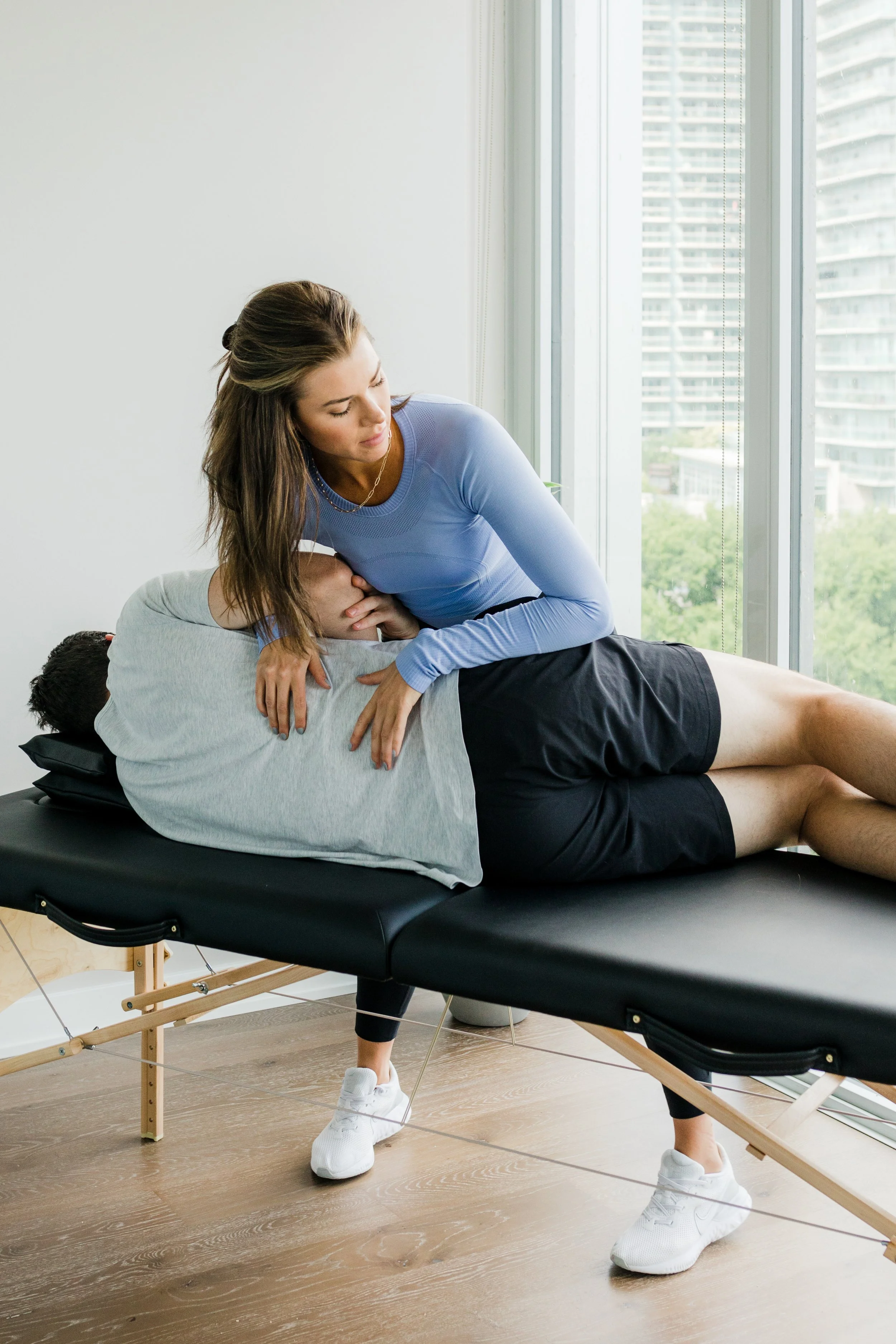
Osteopathic manual treatment (OMT) is highly individualized.
Treatment is shaped by your current physical state, your history of injuries or stressors, the demands your daily life places on your system and the practitioners unique approach. Rather than applying a predetermined sequence of techniques, osteopathy adapts to the unique presentation of each patient at every visit. OMT relies on continuous observational and palpatory assessment, feeling how tissues respond, adjusting pressure and direction, and selecting techniques based on what your body needs in real time. No two bodies compensate in the same way, and no two patterns of discomfort share identical mechanical, neurological, or behavioral contributors.
This means that:
Each session looks different, even for the same patient.
Treatment evolves as your body adapts and integrates previous work.
Your comfort, feedback, and nervous system responses guide the pace and depth of care.
Techniques may vary from subtle, low-force approaches to more dynamic tissue work, depending on what is appropriate for your body that day.
The goal is not only to reduce symptoms, but to understand why your system is overloaded, restore mobility where it has been lost, and help your body move more efficiently.