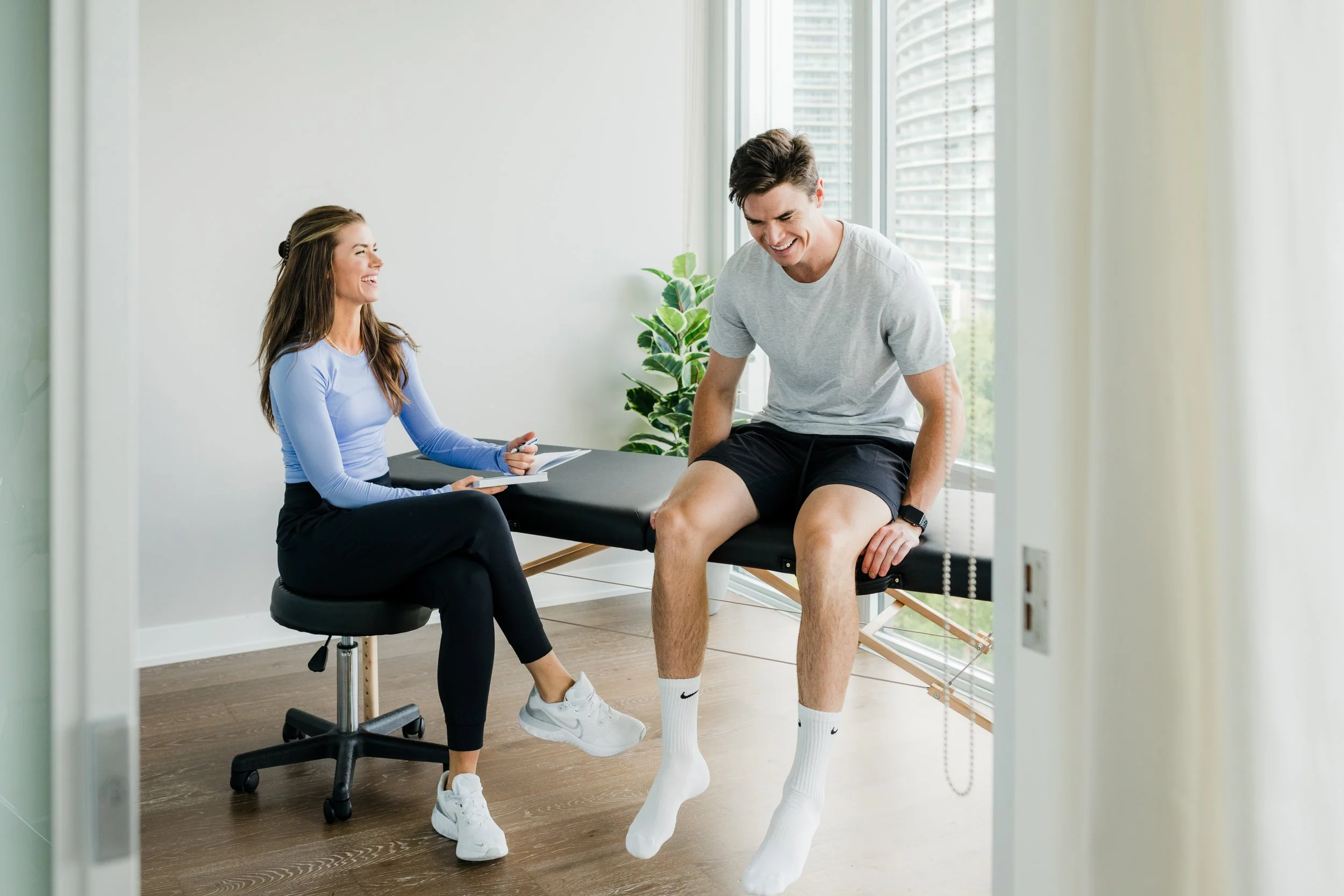
A Glance Into Treatment
What Osteopathy Helps With
Manual osteopathy helps by identifying and addressing:
Areas of restricted motion
Tissues under excessive tension
Inefficient load transfer through joints and fascia
Postural and compensatory patterns
Asymmetry and pressure imbalances in the trunk and pelvis
Changes in circulation, breath mechanics, and fluid stagnation
Protective responses from the nervous system
When these patterns improve, many people notice less discomfort, better mobility, and a greater sense of ease in their bodies.
Musculoskeletal Discomfort & Movement Restrictions
Muscular tension, joint dysfunction, fascial restriction, scoliosis and “one-sided” patterns, often stemming from:
Postural habits (desk work, tech posture, lifting)
Previous injuries or surgeries
Compensation from sport or training
Repetitive activities and load
Long-term stress and bracing patterns
Pregnancy-Related Discomfort
As a woman’s body adapts to support a growing baby, women may experience:
Pelvic or low back pain
Sciatic-type pain or leg symptoms
Rib or upper back discomfort
Round ligament tension
General tightness or pressure
Changes in gait (how you walk)
Difficulty sleeping
Pregnancy induced thoracic outlet syndrome, mastitis and carpal tunnel
Postpartum Recovery & Pelvic Health
After birth the body is adapting again: healing tissue, reorganizing posture under a new center of mass, and keeping up with the physical demands of caring for a newborn. Common reasons postpartum patients seek osteopathy include:
Pelvic or low back pain (SIJ, facet, disc pain)
Rib and upper back tightness (especially from feeding positions and birth aftermath)
Pressure changes through the diaphragm, abdomen or pelvis
Stress-Related Tension & Nervous System Overload
Neck and shoulder tightness
Jaw tension, TMJ and clenching
Upper back and chest stiffness
Headaches and migraines
Circulation, Fluid & Pressure Patterns
Swelling or fluid retention
Heaviness in the legs or pelvis
“Puffiness” and generalized stagnation
Discomfort related to poor fluid movement
Digestive & Pressure-Related Discomfort
Abdominal tension or tightness
Diaphragm restriction affecting breathing and pressure
Rib stiffness that limits upper abdominal mobility
Sensations of bloating or sluggishness
Work through the diaphragm, ribs, spine, and abdominal fascia can help improve pressure regulation, vagal tone and digestive rhythm.
Old Injuries & Compensatory Patterns
Even when an injury has “healed,” the body often continues to move around it. People often come in for:
Lingering stiffness after sprains, strains, or fractures
Asymmetry or one-sided tightness
Recurring discomfort in the same area over time